


Using Dimmer Switches in Small Attic Spaces
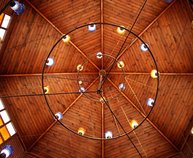
Dimmers give flexible control without adding clutter. They help small rooms feel calm in the evening and bright enough during dull days.

Attic rooms and loft conversions have a character all of their own. They feel tucked away, peaceful, and often surprisingly snug. But they also tend to be small, oddly shaped, and short on natural light. That combination makes lighting tricky. You need brightness for dull mornings and dark afternoons, yet you also want a gentle, restful glow in the evening. A dimmer switch is one of the simplest ways to achieve both without filling every surface with lamps and cables.
Why dimmers make sense in attic rooms
In a small attic space, every element has to earn its place. A dimmer replaces a standard switch with no extra clutter, and it gives you a continuous range of light rather than a single fixed output. That matters in a room with a low, sloped ceiling, because overhead fixtures can feel harsh when they are running at full power. Dimming them by just twenty or thirty per cent can soften the whole space.
Dimmers are also useful for the way loft rooms are actually used. During the day, you might need bright light for a home office, a hobby area, or a guest bedroom. In the evening, the same room often becomes a cosy retreat. A dimmer lets you shift between those moods with a single touch, and it can help you avoid the cave-like feeling that small rooms sometimes get when a single bright bulb is your only option.
Choosing a dimmer that works with modern LED bulbs
Not every dimmer plays nicely with every bulb. If you are upgrading a loft conversion, check that your chosen dimmer is compatible with the LED lamps you plan to use. Older leading-edge dimmers can cause flickering, buzzing, or a limited dimming range with LEDs. A trailing-edge dimmer is usually the better choice for modern LED lighting because it handles low loads more smoothly.
You also need to think about the minimum load. Many LED bulbs draw very little power, and some dimmers require a minimum wattage to work properly. If your total load is too low, the dimmer may flicker or fail to dim at all. The solution is often to choose a dimmer specifically rated for low-wattage LED circuits, or to use a dimmer that includes a small bypass load. Always test the combination before you commit to a full set of fixtures, especially if you are buying several identical downlights.
- Look for the words “dimmable” on the bulb packaging, not just “LED”.
- Check the dimmer’s minimum and maximum load against your total bulb wattage.
- Choose a trailing-edge dimmer for the smoothest LED performance.
- If you hear buzzing, try a different dimmer or a different bulb brand.
Where to put switches in awkward loft spaces
Placement is more important in an attic than in a standard room. You want the switch to be easy to find and easy to reach, even when you are carrying something or coming up the stairs in the dark. The top of the staircase is an obvious spot, but avoid putting the switch behind a door that opens against the wall. On a landing, a two-way circuit is ideal: one switch at the bottom of the stairs, another at the top, so you never have to cross a dark room to find the light.
If the ceiling is very low, a pull-cord dimmer can work well, but it limits your choice of finishes. A better option is often a wireless dimmer switch mounted on a nearby stud wall, or a smart relay fitted behind an existing switch. These allow you to dim from a convenient position without running new cables through insulated roof spaces. For under-eaves areas, keep the switch on a vertical wall rather than a sloped ceiling, where it would be awkward to reach.
Layering light for calm evenings and dull days
A single dimmed ceiling light is a good start, but small attic rooms really come alive when you layer the lighting. Put the main downlights or pendant on one dimmer circuit, then add a second dimmable circuit for wall lights, shelf lights, or LED strips tucked behind a bed head or desk. In the evening, turn the main light down to ten or twenty per cent and bring up the softer layers. During a dull day, run the main circuit at full brightness to lift the whole room.
Colour temperature matters too. Warm white bulbs around 2700K feel calm and cosy, while cooler 3000K to 4000K bulbs are better for tasks. If you want the best of both, look for dim-to-warm bulbs, which shift from crisp white to a gentle amber as you dim them. A dimmer with a memory function is also handy, because it returns to your last setting instead of blasting on at full power every time.
Practical installation and safety in a loft conversion
Loft spaces can get hot, especially where insulation is packed tightly around downlights. Dimmer switches themselves generate a small amount of heat, so they need a deep enough back box and some ventilation. If you are replacing a standard switch, check that the wall box has room for the dimmer’s body. Never exceed the dimmer’s maximum load, and if you are unsure about the wiring, use a qualified electrician. In the UK, electrical work in a loft conversion may need to comply with building regulations, so it is worth getting it checked properly.
Fire-rated downlights and hoods are often required where a ceiling separates a habitable room from another dwelling or a garage. Keep clearance around insulation, and avoid covering dimmer switches with curtains or furniture. A little planning here keeps the installation safe and reliable for years.
Small touches that make a big difference
Finally, think about the switch itself. A metal dimmer with a soft-touch knob feels reassuringly solid, and a dark finish can blend into a moody attic scheme. Smart dimmers let you set scenes from a phone or a bedside remote, which is a real luxury in a small room. But even a simple rotary dimmer, well placed and matched to the right bulbs, will transform how your loft feels. It gives you calm evenings, bright dull days, and a space that always feels just right.

Post a comment